From Core to Spun: Why Cellulose Film is the Performance Standard for Spandex Winding
For decades, regenerated cellulose film has been widely used as a liner material in spandex winding. While sustainability is receiving more attention today, its adoption in the spandex industry originally came from process requirements rather than environmental considerations.
Heat resistance, low static behavior, and stable unwinding performance continue to make cellulose film a common choice in many winding operations.
Thermal Stability in High-Speed Winding
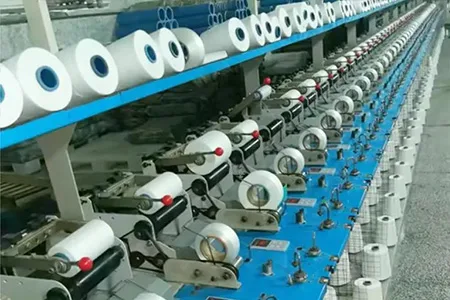
In spandex production, winding is a critical phase involving ultra-high speeds and extreme tension. During dry spinning, filaments emerge from high-temperature chimneys—often exceeding 200°C—and retain significant residual heat upon reaching the winder.
Standard plastic films often soften or undergo micro-melting under these conditions, causing the innermost fibers to embed into the film surface. Cellulose film remains stable under the heat generated during normal spandex winding operations. This heat resistance prevents fiber adhesion and ensures the innermost layer peels away cleanly during downstream processing.
Solvent Resistance and Chemical Purity
Spandex production relies on solvents such as DMF (Dimethylformamide). Many synthetic materials swell or degrade when exposed to these polar solvents, which can lead to additive migration and fiber contamination.
Cellulose film possesses a natural immunity to these chemical agents. It acts as a robust barrier, protecting the paper core from corrosion while maintaining the chemical purity of the spandex fiber. Consistent material performance helps maintain yarn quality throughout downstream processing.
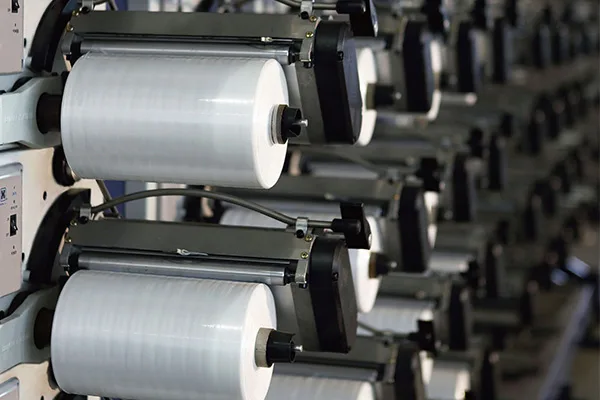
Mechanical Rigidity Under High Tension
The initial impact of high-speed winding exerts immense pressure on the core liner. While elastic films may wrinkle or deform under such stress, the high modulus and low elongation of cellulose film provide a rigid support structure.
This inherent stiffness maintains the integrity of the base layer despite tension fluctuations. By providing a stable foundation, the film prevents internal collapses of the yarn cake, ensuring consistent geometry from the first wrap to the finished package.
Natural Antistatic Performance

Synthetic fibers frequently generate static charges during friction-heavy processes. These charges cause the bottom yarn layers to cling to the core, resulting in tension spikes or yarn breakage during unwinding at weaving facilities.
Unlike many plastic films, cellulose film exhibits natural antistatic behavior. In winding operations, cellulose film shows extremely low static buildup, helping ensure smooth unwinding performance. This leads to a smooth, consistent release, even for the final meters of the spool, significantly reducing material waste.
Dead-fold Precision and Sustainability
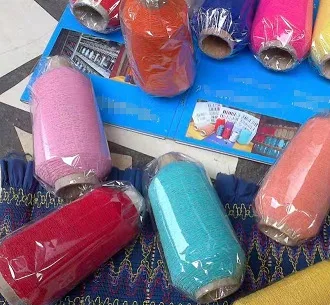
Cellulose film also offers practical advantages during final packaging. Once folded, cellulose film tends to hold its shape instead of springing back.
This characteristic allows for tight, compact manual overwrapping of finished spandex packages, providing protection against dust and moisture without the need for additional adhesives. Furthermore, as a bio-based and compostable material, it aligns with global carbon-neutral goals while maintaining industrial performance.
Material Selection for Process Reliability
In spandex winding, the liner material influences package stability, unwinding consistency, and downstream processing performance.
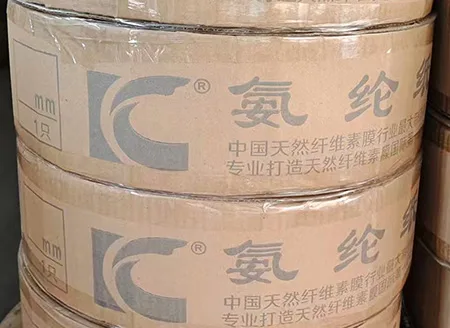
Despite the availability of various plastic films, regenerated cellulose film remains widely used in the industry. Its combination of heat resistance, solvent compatibility, low static behavior, and mechanical stability continues to meet the practical requirements of spandex production.
KEDE supplies cellulose film for spandex winding applications in both jumbo roll and converted formats, supporting different production and converting requirements.