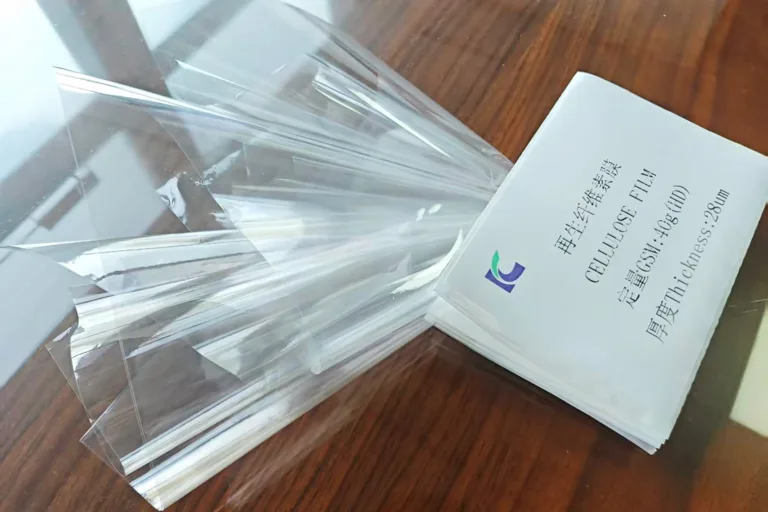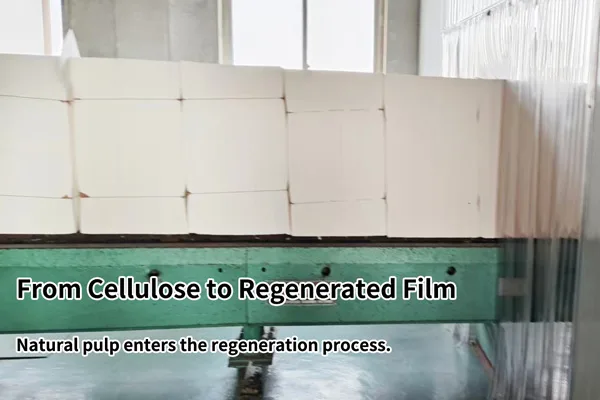
What Does “Regenerated” Mean in Regenerated Cellulose Film?
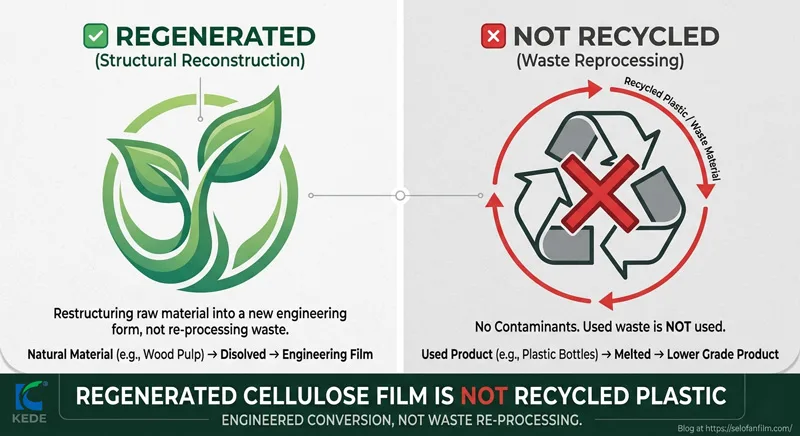
In the packaging industry, the word “regenerated” is often misunderstood.
Many people associate it with:
- recycled plastic
- recycled resin
- reused waste material
However, in regenerated cellulose film, “regenerated” does not refer to waste recycling.
It is a material processing term.
1. “Regenerated” Does Not Mean “Recycled”
In industrial materials, “regenerated” describes a rebuilding process.
It does not mean melting and reusing discarded plastic.
Instead, a natural polymer is first dissolved or chemically transformed, then re-formed into a new continuous structure.
For regenerated cellulose film, the process can be simplified as:
natural cellulose → dissolution → regeneration → film formation
In this context, “regenerated” refers to material restructuring rather than recycled waste processing.
2. Why Does Cellulose Need Regeneration?
Natural cellulose exists in forms such as:
- wood pulp
- cotton fiber
- plant fiber
However, these natural forms cannot directly become transparent film.
To form a continuous film structure, cellulose must first be converted into a soluble form.
It is then regenerated through controlled processing.
This is why the industry uses the term:
Regenerated Cellulose
Without regeneration, cellulose remains a natural fiber material rather than an engineered film.
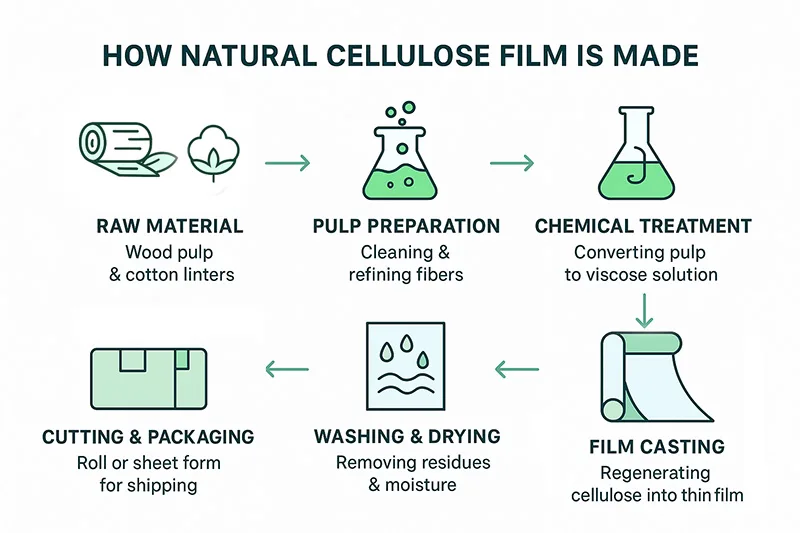
A detailed overview of the production process is available here:
https://selofanfilm.com/natural-cellulose-film-sustainable-packaging-for-the-future/
3. Why Does the Industry Still Use the Term “Regenerated Cellulose”?
The term “Regenerated Cellulose” remains important because it distinguishes:
- natural cellulose raw material
from - engineered cellulose film
Without “regenerated,” the word “cellulose” may simply refer to pulp or plant fiber.
The term also clarifies that:
- the material originates from natural cellulose
- the structure has been rebuilt
- the material forms a continuous film system
This distinction is important in packaging applications.
Cellulose film often looks similar to plastic film.
The term “Regenerated Cellulose” helps define the material system more clearly.
4. What Characteristics Does the Regeneration Process Preserve?
Although the structure is rebuilt, the material still retains many cellulose-related characteristics.
As a result, regenerated cellulose film typically shows the following material behaviors:
Natural Breathability
This comes from the microstructure of the cellulose system.
Fold Retention
The film does not easily rebound after folding.
Reduced Static Build-Up
The surface does not easily accumulate strong static charge.
High Transparency and Surface Gloss
These characteristics come from the uniform regenerated film structure.
Compostable Material System
The material base still belongs to the cellulose category.
Related products:
https://selofanfilm.com/product-category/cellulose-film/
Transparent roll cellulose film:
https://selofanfilm.com/product/transparent-roll-cellulose-film/
5. Regenerated Cellulose Exists Beyond Film Applications
Regenerated cellulose belongs to a broader material family.
In addition to cellulose film, it also includes:
- viscose rayon
- modal
- lyocell / Tencel
These materials follow the same general principle:
cellulose → dissolution → regeneration → new structure
The main difference lies in the final material form.
In packaging applications, this process produces regenerated cellulose film.
6. KEDE’s Regenerated Cellulose Film Production
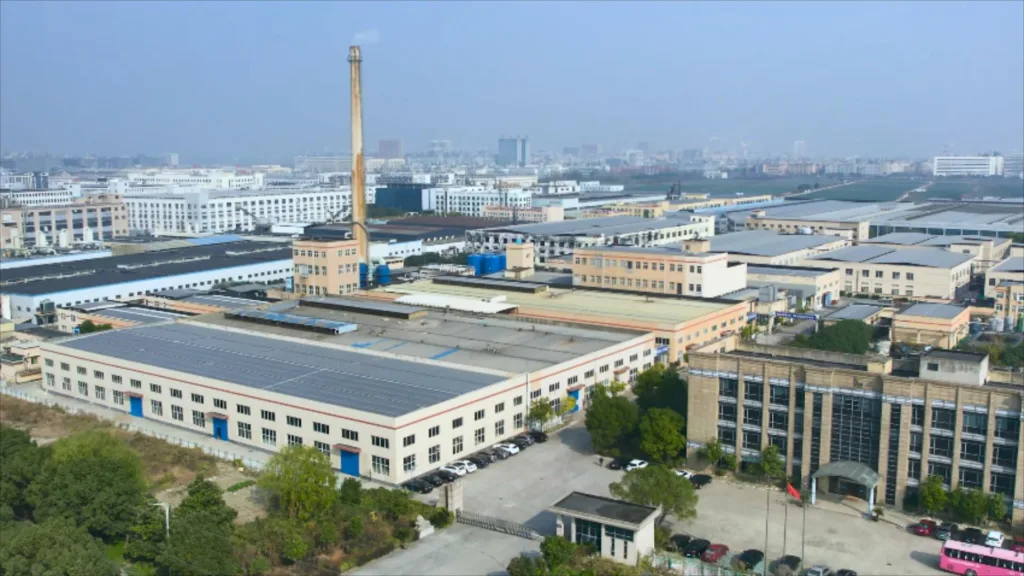
KEDE has specialized in regenerated cellulose film production for more than 20 years.
The product range includes:
- jumbo roll film
- flat sheet film
- coated cellulose film
- colored cellulose film
Production management mainly focuses on:
- regeneration process stability
- film uniformity
- temperature and humidity control
- downstream converting compatibility
Company information:
https://selofanfilm.com/about/