The Art and Science of Twist Tying: Why It’s the Golden Standard in Candy Packaging
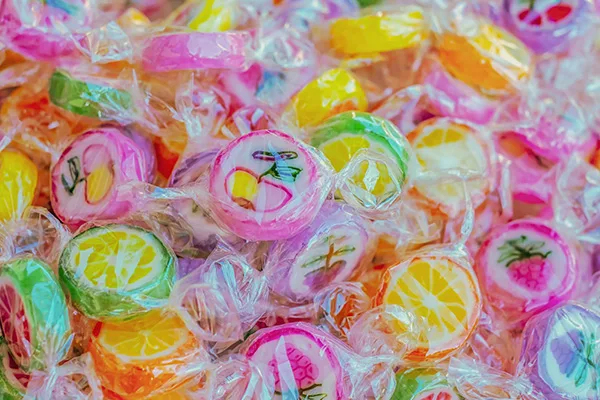
As packaging design continuously evolves, the classic twist-tie structure remains an essential feature in the industry. With its design of two twisted ends, forming a butterfly-like shape, it offers a unique visual appeal while giving candy a natural, premium aesthetic.
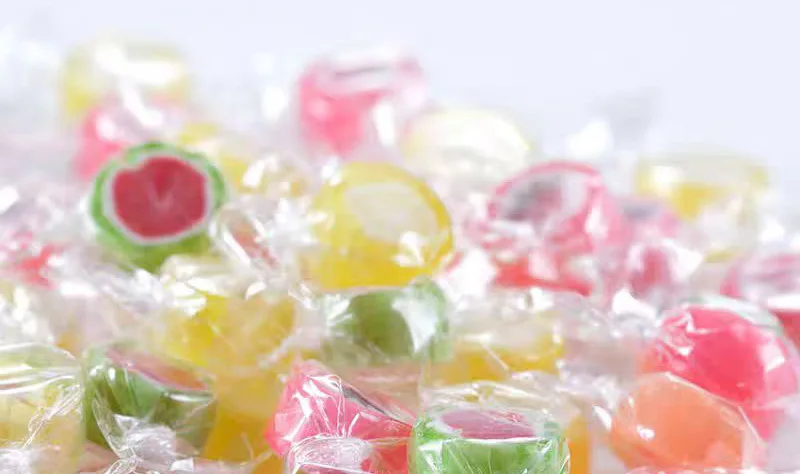
Achieving this packaging design requires a key material property: the “dead-fold” characteristic. Only materials with excellent dead-fold properties can maintain their shape after mechanical twisting, preventing any rebound or loosening, thus ensuring the visual appeal and sealing performance of the package.
What is “Dead-Fold” Property?
“Dead-fold” refers to a material’s ability to stay in a deformed state without returning to its original shape after being twisted or pressed. This property is crucial in packaging, especially for twist-tie designs in candy packaging.
- Ordinary plastic films tend to unravel after twisting, affecting both the visual effect and the sealing integrity.
- Natural cellulose film (Cellulose Film) possesses excellent dead-fold properties, allowing it to firmly retain its shape and avoid rebound. This makes candy packaging both aesthetically pleasing and provides a strong physical barrier to protect the product from external contamination.
From Natural Materials to Metallic Shine
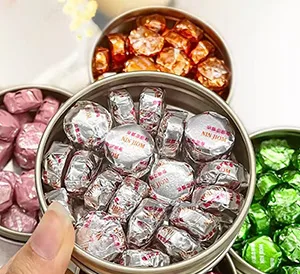
Although natural cellulose film has excellent dead-fold properties, modern industrial advancements have brought new options. By applying a vacuum metallization process, twist-tie packaging not only retains the essential qualities of cellulose film but also adds a metallic layer, enhancing both the visual appeal and functionality.
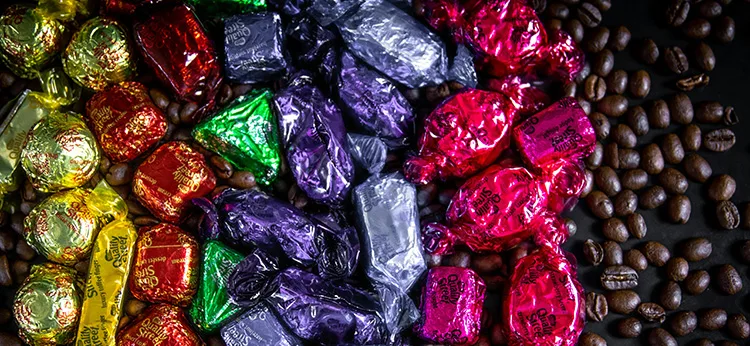
Advantages of the Metallic Layer:
- Enhanced Barrier Properties: The metallic layer significantly improves the material’s ability to block moisture and oxygen, extending shelf life.
- Production Compatibility: The metallic layer reduces static interference, optimizing the material’s slip performance on high-speed production lines, ensuring stability even during rapid packaging processes.
Why Is Twist-Tie Packaging So Widely Used?
From hard candies to chocolates, from toffees to handmade confectioneries, twist-tie packaging is widely used across various candy products.
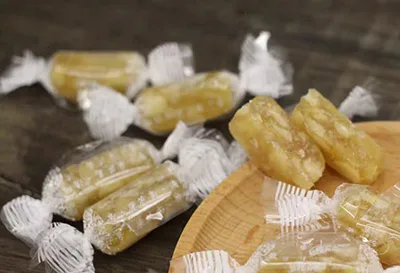
Consumer Side:
- Convenience: A simple twist is all it takes to open, making the experience effortless and adding a ceremonial touch.
Production Side:
- Strong Compatibility: Twist-tie packaging eliminates the need for complex heat sealing processes, reduces heat loss, and is easily adaptable to high-speed automated production equipment.
Environmental and Aesthetic Balance
Cellulose film combines outstanding functional properties with compostability, making it an ideal choice for eco-friendly packaging.
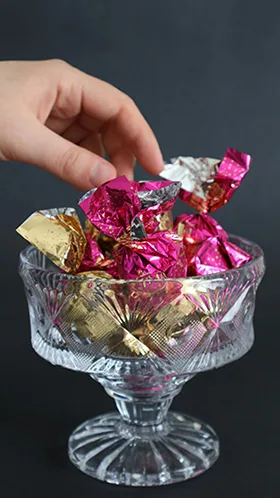
It fully degrades into water, carbon dioxide, and biomass, leaving no environmental footprint. Compared to traditional plastics, cellulose film offers a truly sustainable solution for the candy industry. Twist-tie packaging not only showcases visual aesthetics but also embodies a brand’s green commitment—transforming alluring design while confidently leading consumers toward a plastic-free future.
Twist-tie packaging is more than a visual and tactile experience; it is a fusion of technology and art. With the compostability and environmental benefits of cellulose film, it stands as a modern packaging design benchmark.
At KEDE, we focus on developing and providing high-performance natural materials, ensuring that the classic twist-tie packaging continues to thrive in modern production, remaining efficient, stable, and environmentally friendly.